

Should Florida first-time buyers waive the inspection?
In a competitive offer, waiving the inspection looks like the easy concession. Here is what you are actually giving up, and the middle path most buyers do not know about.
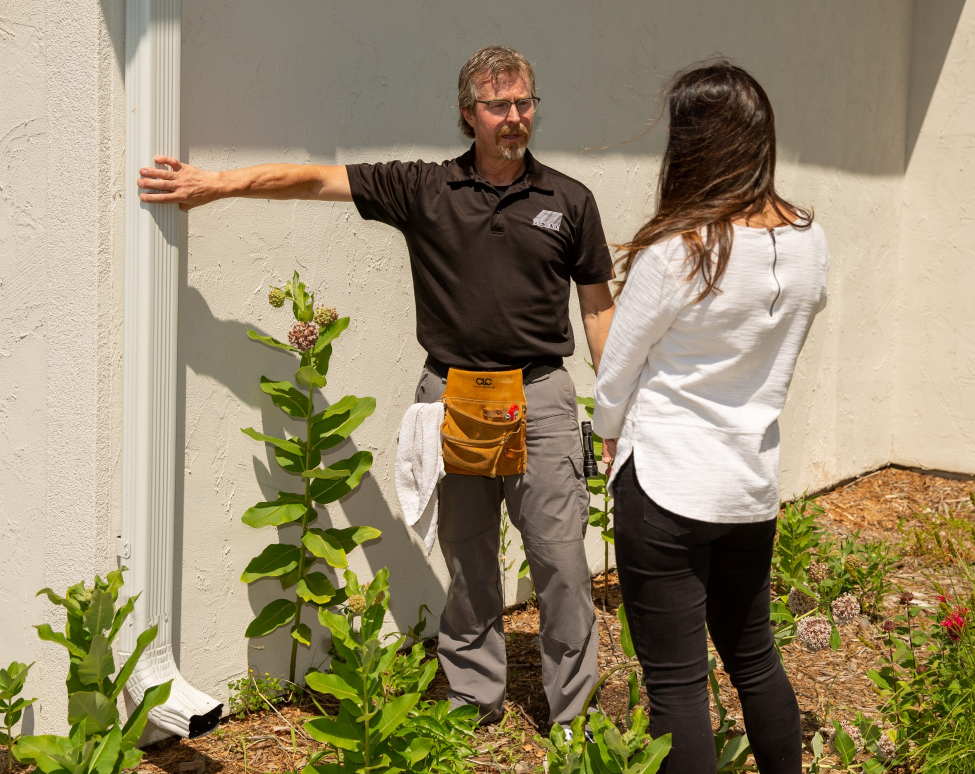
Walking an owner through what I found. The report matters less than the conversation about which items actually need attention.
The short answer
No. Not on a house you plan to live in and pay for over thirty years.
I understand why the question comes up. When a listing gets six offers in a weekend, your agent is looking for anything that makes your paperwork easier to say yes to. Money is fixed. The closing date is usually fixed. The inspection contingency starts to look like the one lever you can pull. But that lever is not a formality you are giving up. It is the only point in the transaction where you get to look at what you are buying with someone whose only job is to tell you the truth about it.
What waiving actually costs
An inspection in this area runs a few hundred dollars. The items I most often flag as a defect or a safety hazard do not. Here is the range I see on ordinary St. Johns County homes, not disasters:
A roof at the end of its service life. Replacement on a typical single-story home here is $14,000 and up, and an aged roof can make a policy hard to place at all.
An air conditioning system past 15 years. In this climate that is not a minor appliance. Full replacement commonly lands between $7,000 and $12,000.
Active moisture intrusion behind a wall or under a shower pan. By the time it is visible, the repair is rarely just cosmetic.
Unpermitted work. A converted garage, an enclosed porch, or a re-wired addition done without inspection becomes your problem the day you take title, both to fix and to insure.
None of that is exotic. Those four categories account for most of the significant findings I write. A seller is not obligated to volunteer any of it, and in Florida a home is sold with a disclosure of known defects, not a guarantee that no defects exist. What the seller genuinely does not know, they do not have to tell you.
The Florida-specific part
There is a second reason that matters more here than in most states: insurance. Carriers writing policies in Florida care about the age and condition of the roof, the electrical panel, the plumbing supply lines, and the water heater. If those items are old or non-compliant, you may find out after closing that the coverage you assumed would be routine is either expensive or unavailable.
Coastal exposure adds its own list. Salt air is hard on condenser coils, exterior fasteners, and metal flashing. Older St. Augustine housing stock brings coquina, block, and additions built across several decades to different standards. These are knowable things. They are only knowable if someone looks.
The middle path
If your offer really does need to compete, you usually have better options than waiving outright. Talk them through with your agent:
An information-only inspection. You keep the inspection but give up the right to ask for repairs or credits. You still get the full report, so you can walk away with your deposit if something serious turns up, and you go in knowing what you will be spending money on.
A shortened window. Offer a four or five day inspection period instead of ten. Sellers are often more sensitive to timeline than to the contingency itself. I can usually get an inspection scheduled and the report delivered inside that window.
A dollar threshold. Agree that you will only request repairs if the findings exceed a set amount. It tells the seller you are not going to renegotiate over a loose outlet cover while protecting you from a failed roof.
All three keep the part that protects you, which is knowing. What you trade away is leverage, and leverage is worth less than information when you are the one moving in.
If you have already waived
Get the inspection anyway, before or shortly after closing. It changes nothing about the contract, but it gives you a prioritized list of what to address first, what to watch, and what can wait. That is the difference between a to-do list and a series of surprises.
And one thing worth saying plainly, because it is the fear underneath the question: most of what I flag is routine maintenance. A report with thirty items on it is a normal house, not a bad one. My job is to tell you which of the thirty actually matter.

Brian Rank, INSpectra Plus LLC
InterNACHI Certified Professional Inspector serving St. Augustine and St. Johns County. I inspect homes and help owners keep them healthy afterward.
FL License HI19007 · InterNACHI ID NACHI25022816 · 904.669.6029
Know exactly what you are buying
Standards-compliant inspections with a clear, photo-rich, severity-rated report. I walk you through every item.